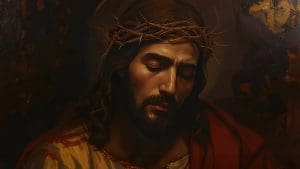
The Question
Let’s tackle a question that appears simple at first glance, yet cuts to the heart of Christian faith: Is Jesus Christ a false prophet?
I admit this question is provocative by design. But in Deuteronomy, Moses establishes a crystal-clear standard for distinguishing authentic prophets from pretenders:
When a prophet speaks in the name of the LORD, if the word does not come to pass or come true, that is a word that the LORD has not spoken; the prophet has spoken it presumptuously.
―Deuteronomy 18:22 (ESV)
The test is simple, yet crucial: Everything a true prophet declares as coming from God must come to pass. No exceptions.
Jesus of Nazareth was said to be “a prophet mighty in deed and word before God and all the people” (Luke 24:19). More than that, He Himself declared: “I have not spoken on my own authority, but the Father who sent me has himself given me a commandment, what to say and what to speak” (John 12:49).
This means everything Jesus said carried the weight of divine authority. By Moses’ standard, if even one prophecy failed, Jesus would be exposed as a false prophet.
Strikingly, many Christians overlook the necessity of Christ’s perfect fulfilment of the sign of Jonah, the only sign He gave the skeptical Pharisees as proof of His messianic identity.
So here’s the million-dollar question: Did Jesus fulfil the sign of Jonah?
The answer will surprise you.
The Ultimate Prophetic Test
In Matthew 12, Jesus faced hostile Pharisees demanding miraculous proof of His authority. Instead of performing on command, Jesus made the most audacious prophetic claim of His ministry:
An evil and adulterous generation seeks for a sign, but no sign will be given to it except the sign of the prophet Jonah. For just as Jonah was three days and three nights in the belly of the great fish, so will the Son of Man be three days and three nights in the heart of the earth.
―Matthew 12:39–40 (ESV)
This prophecy―called the sign of Jonah―was not a one-off statement. Jesus repeated this promise multiple times, both publicly and privately, as His crucifixion approached (see John 2:19; Matthew 16:21; Matthew 17:22–23; Matthew 20:18–19; Mark 8: 31; Mark 9:31; Luke 9:22). Needless to say, Jesus staked His entire prophetic credibility on this single, testable claim.
Here’s what makes this prophecy extraordinary: Jesus didn’t just predict His death and resurrection — He specified the exact duration with mathematical precision. By the Deuteronomy standard, Jesus’ prophetic credibility — and thus His entire ministry — hinged on this single prediction coming true exactly as promised.
Decoding Biblical Prophecy: The Framework You Need
Before we can evaluate the fulfillment of Jesus’ prophecy, we need to understand how biblical prophecies actually work. Through careful analysis, we can discover that they fall into three distinct categories:
Allegorical Prophecies
They are written in a highly symbolic language and require divine interpretation.
Example: When Isaiah predicted valleys would be “lifted up” and mountains “made low” to prepare God’s way, John the Baptist fulfilled this by baptizing rich and poor together in the Jordan — spiritually leveling social distinctions and preparing the hearts of people for Jesus’ ministry.
Literal Prophecies
They are direct statements meant exactly as written.
Example: Elijah told King Ahab there would be no rain “except by my word.” Result? Literal drought until Elijah said otherwise.
Mixed Prophecies
They combine both literal and symbolic elements.
Example: When Isaiah prophesied that a “young woman shall conceive and bear a son” named Immanuel, this was fulfilled literally when Isaiah’s own wife bore a child, and 700 years later, when Mary bore Jesus. Yet none of these children bore the symbolic name Immanuel, “God with us”, because they were a sign that God was with His people to deliver them.
The Sign of Jonah: Three Critical Questions
Let’s analyze Jesus’ most crucial prophecy systematically:
- What type of prophecy is this?
- Was it fulfilled?
- How was it fulfilled?
Question 1: What Type of Prophecy?
Here’s where it gets interesting. Jesus gave this prophecy in two different forms:
Allegorical version (John 2:19): “Destroy this temple, and in three days I will raise it up.” The “temple” was His body — pure metaphor.
Literal version (Matthew 12:40): “Just as Jonah was three days and three nights in the belly of the great fish, so will the Son of Man be three days and three nights in the heart of the earth.”
While both versions contain the time marker of three days and three nights, the Matthew version contains zero symbolic elements. Jonah literally spent three days and nights in the fish (Jonah 1:17). And Jesus was making a mathematical claim about the precise duration of His death.
Question 2: Was It Fulfilled?
The evidence is overwhelming:
Biblical testimony: Mark records that Jesus “rose early on the first day of the week” (Mark 16:9). Paul, whose historical credibility is unquestioned, testified that Christ “was raised on the third day” and “appeared to more than five hundred brothers at one time” (1 Corinthians 15:4–6).
Historical testimony: Even the Jewish historian Flavius Josephus wrote in 93 CE: “He appeared to them spending a third day restored to life.”
But beyond written testimony stands an even more powerful witness: the blood of the martyrs. Since the Church’s birth, nearly 70 million Christians have died as martyrs. From Stephen, stoned to death, to young Perpetua who faced execution declaring “I am a Christian” and went “all happy toward the prison”, these witnesses sealed their testimony in blood based on eyewitness accounts of the risen Christ.
If Jesus didn’t rise as promised, these people died for a lie. As Paul wrote: if Christ isn’t risen, Christians are “the most pitiable of all men” (1 Corinthians 15:19).
Question 3: How Was It Fulfilled?
This is where most people get confused. We know Jesus rose Sunday morning at dawn — the Greek word prōi means “very early morning” or “at daybreak.”
But if He rose Sunday morning, when exactly was He buried to fulfill “three days and three nights”?
The Chronological Key: Understanding Biblical Time
To answer this question, we need first to understand that biblical time works differently from modern time. A day begins at sunset and runs until the next sunset, divided into:
- לַיִל―layil―Night: sunset to dawn
- יוֹם―yom―Day: dawn to sunset
More importantly, ancient peoples commonly referred to a fraction of a time period as the entire period. For example, Queen Esther asked for a three-day fast, saying, “Do not eat or drink for three days, night or day. Then I will go to the king” (Esther 4:16). But the very next verse says, “On the third day, Esther put on her royal robes and stood before the king” (Esther 5:1).
Hadassah fasted three days and nights, but clearly not 72 full hours — otherwise she would have approached the king on the fourth day.
Jesus followed this same pattern.
The Chronological Solution
The Lord rose early Sunday morning, and the Bible declares it was the third day of His death. If we count back 72 hours precisely, this places His burial at the earliest on Thursday between 5:30 and 7:00 AM.
Now, we know this is impossible, since the Lord was crucified around 9 o’clock according to Mark 15:25, and died around 3 PM according to Mark 15:33–37.
Working backward from Sunday morning resurrection, we have:
- Sunday morning (dawn): Resurrection occurs — 3rd Day
- Saturday evening to Sunday dawn: 3rd Night
- Saturday dawn to evening: 2nd Day
- Friday evening to Saturday dawn: 2nd Night
- Friday dawn to evening: 1st Day
- Thursday evening to Friday dawn: 1st Night
Result: Jesus died Thursday afternoon around 3 PM (Mark 15:33–37) and was buried before sunset by Joseph of Arimathea and Nicodemus — exactly fulfilling the sign of Jonah.
Why This Matters Today
The Friday Problem
Skeptics of the resurrection accounts raise what I consider a fair objection: the mathematical impossibility of fitting three days and three nights between Friday evening and Sunday morning. To address this challenge, many appeal to Jewish idiomatic usage where part of a day counts as a whole day. This view is widely accepted nowadays.
But here’s the issue with this approach. Jesus didn’t just say “after three days” or “on the third day” — expressions that could accommodate such flexibility. He specifically appealed to Jonah’s experience and declared “three days and three nights,” and this phrase serves as the defining sign of His messianic identity. This was the central proof He offered to skeptical Pharisees, His response to those demanding miraculous validation of His authority!
When we interpret such precise language as flexible Jewish idiom, we risk something significant: diluting the weight of His prophetic claim. This approach creates the appearance of evasion when skeptics examine the Gospel timeline with mathematical precision.
The Real Issue
Honest engagement with Jesus’ words demands that we confront the precision of His language — “three days and three nights” — rather than explaining it away through general cultural practices. After all, if the Lord can be precise about seventy years of Babylonian captivity (Jeremiah 25:11–12), why would He be imprecise about the very sign that validates His messianic identity?
The Lord, I believe, can be exact since He is Almighty, therefore omniscient. This preserves both the mathematical nature of His messianic proof and our confidence in His prophetic authority.
The Ultimate Irony
The precise prophetic fulfillment of the sign of Jonah has profound implications. It provides unshakeable evidence that Jesus is exactly who He claimed to be — the ultimate Prophet whose every word comes from God. It demonstrates that biblical prophecy withstands rigorous chronological scrutiny, strengthening confidence in Scripture’s reliability. And it offers compelling responses to those questioning Jesus’ prophetic credentials.
But by trying to fit a precise prophecy into an impossible timeline, we risk making Jesus a false prophet.
Conclusive Words
The sign of Jonah stands as one of Scripture’s most precisely fulfilled prophecies. Jesus’ promise to spend “three days and three nights in the heart of the earth” was accomplished exactly as foretold.
This meticulous fulfillment answers our opening question definitively: Jesus Christ is not a false prophet.
He is the Prophet par excellence — the one in whom every promise of God finds its “Yes” and “Amen” (2 Corinthians 1:20). The resurrection on the third day, witnessed by hundreds and sealed in the blood of countless martyrs throughout history, remains the cornerstone of Christian faith and ultimate proof of Jesus’ divine authority.